


At the moment you receive your new property, it may feel like you’ve finally reached the end of a long journey of searching and planning. But the truth is, this moment marks the beginning of an even more important phase — making sure that what you bought is truly worth what you paid.
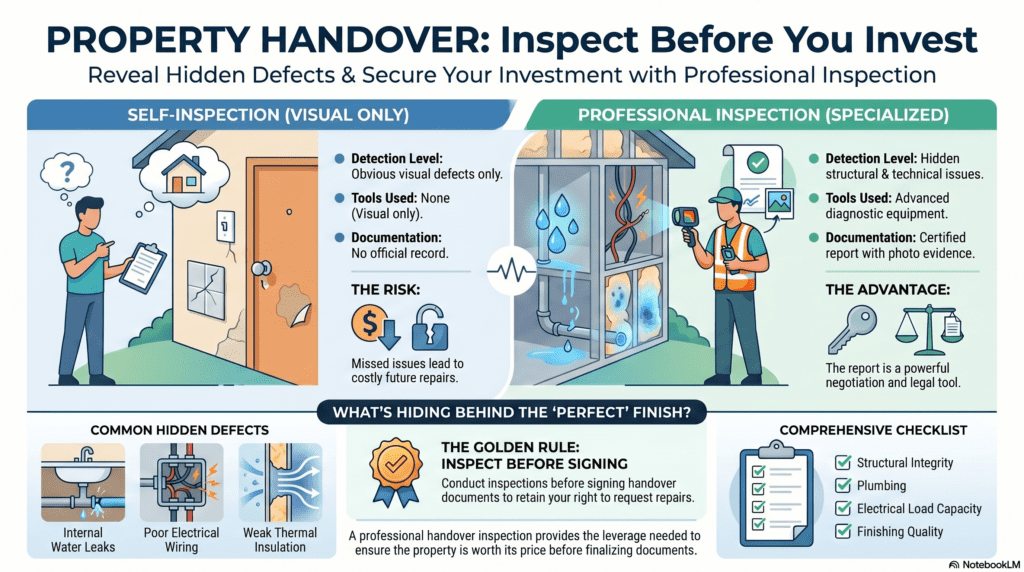
Many buyers fall into a common trap: blindly trusting appearances.
A property may look perfect — clean paint, shiny floors, and a flawless finish. But behind that polished surface, serious defects could be hiding, potentially costing you thousands later on.
This is where property handover inspection becomes your first line of defense in protecting your investment.
Why Is Property Handover Inspection a Step You Can’t Ignore?
Buying a property is not just another purchase — it’s a long-term financial commitment. Yet, thousands of units are handed over every year with defects that only become visible after moving in.
Common issues that appear after handover:
- Hidden water leaks inside walls
- Poor electrical installations
- Weak thermal insulation
- Flooring or tiling defects
- Improperly fitted doors and windows
The real problem isn’t just the existence of these issues — it’s discovering them too late, when repairs are often at your own expense.
What Is Property Handover Inspection, Exactly?
Property handover inspection is a comprehensive evaluation process carried out before or during the handover of a residential or commercial unit. Its purpose is to identify any structural, technical, or finishing defects.
This inspection is conducted by professionals using advanced tools and techniques, resulting in a detailed report that includes:
- The overall condition of the property
- A list of identified defects (if any)
- The quality level of execution
- Repair recommendations
Traditional Inspection vs. Professional Inspection
Many people believe they can inspect a property on their own — but the reality is very different.
Self-inspection:
- Based only on visual checks
- Detects only obvious defects
- Lacks accuracy
- Provides no official documentation
Professional inspection:
- Uses specialized diagnostic tools
- Detects hidden defects
- Provides a certified report
- Strengthens your legal position with the developer
This is the difference between a random decision and an informed one.
When Should You Conduct a Property Handover Inspection?
The ideal time is before signing the official handover documents.
Why?
Because at this stage, you still have the right to:
- Request repairs
- Delay acceptance
- Negotiate with the developer
After signing, your options become significantly limited.
Key Elements of a Property Handover Inspection
A professional inspection follows a structured checklist that covers every aspect of the property:
1. Structural Inspection
- Walls and cracks
- Ceilings
- Floor alignment
2. Electrical Inspection
- Wiring systems
- Switches and outlets
- Electrical load capacity
3. Plumbing Inspection
- Pipes and fixtures
- Water pressure
- Leak detection
4. Finishing Inspection
- Paintwork
- Tiles and flooring
- Doors and windows
5. Insulation Check
- Thermal insulation
- Waterproofing
Each of these elements can lead to serious future issues if overlooked.
How Does Inspection Impact Your Investment?
Some may see inspection as an extra cost — but in reality, it’s a smart investment.
Here’s the truth:
- Fixing a minor leak later = high cost
- Re-doing finishes = time and money wasted
- Electrical issues = safety risk
While early inspection:
✔ Saves money
✔ Prevents future problems
✔ Gives peace of mind
Inspection Report: The Most Important Document After the Purchase Agreement
One of the most valuable outcomes of a property handover inspection is the inspection report.
This report is more than just paperwork — it’s:
- An official record of the property’s condition
- A powerful negotiation tool
- A reference for any future issues
It usually includes detailed descriptions and photos that make it difficult to overlook any defect.
Common Mistakes During Property Handover
Despite available information, many buyers still make the same mistakes:
❌ Rushing the handover process
❌ Relying solely on the seller’s word
❌ Skipping inspection to save money
❌ Not reviewing the contract carefully
These mistakes can turn into long-term problems.
Do All Properties Need Inspection?
The short answer: Yes, without exception.
Whether the property is:
- Brand new from a developer
- A resale unit
- An apartment or a villa
Every type carries potential risks — even luxury projects.
The Future of Property Inspection: From Luxury to Necessity
In recent years, property handover inspection has become an essential part of the real estate process, especially in Gulf countries.
It’s no longer an optional step — it’s a standard for making smart purchasing decisions.
With growing awareness, specialized companies are now offering more advanced and precise inspection services using modern technologies.
How to Choose a Reliable Property Inspection Company
Not all service providers deliver the same quality.
Key criteria:
- Proven experience in the market
- Clear and detailed reports
- Use of advanced tools
- Positive customer reviews
Choosing the right company can make a significant difference.
Conclusion
Buying a property is a major milestone — but protecting that investment requires smart decisions.
Property handover inspection is not a luxury; it’s a crucial step that protects you from:
- Financial losses
- Technical issues
- Future stress
If you’re about to receive your unit, don’t let excitement blind you to the details.
Inspect, verify, and be sure — because small details today can become big problems tomorrow
read more :